DeepKraken Home

Category

Tools & Guides

16 articles

Cold Storage, Warm Signals: How Hardware Wallets Betray the Privacy They Advertise

Cold Storage, Warm Signals: How Hardware Wallets Betray the Privacy They Advertise

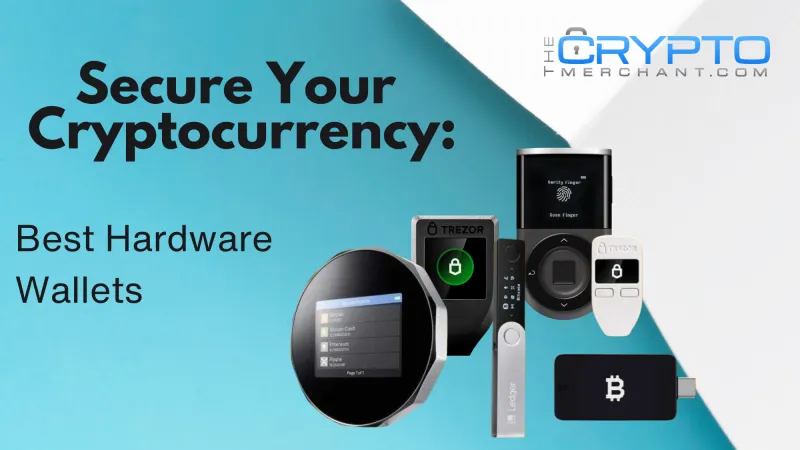
Hardware wallets occupy a near-sacred position in the self-custody narrative, marketed as impenetrable vaults that sever the connection between your digital assets and any surveillance infrastructure. The reality is considerably more complicated. From USB metadata to firmware telemetry, the operational footprint of most consumer hardware wallet setups quietly reconstructs the very exposure profile users believed they had eliminated.

The Incomplete Escape: Why Self-Custody Without Operational Discipline Leaves You More Exposed Than Before

The Incomplete Escape: Why Self-Custody Without Operational Discipline Leaves You More Exposed Than Before

Migrating assets from a centralized exchange to a self-custody wallet is widely treated as the final step toward financial privacy — but for most users, it is merely the first. Without disciplined operational security practices governing hardware, network behavior, and transactional timing, self-custody can paradoxically consolidate your forensic footprint rather than dissolve it.

The Withdrawal Paradox: How Your Exit From an Exchange Becomes the Foundation of Your Forensic Profile

The Withdrawal Paradox: How Your Exit From an Exchange Becomes the Foundation of Your Forensic Profile

Migrating assets from a centralized exchange to a self-custody wallet is widely regarded as a privacy milestone. What most users fail to recognize is that the withdrawal itself — its timing, amount, and destination — is frequently the most durable piece of surveillance evidence an investigator will ever need. Understanding the mechanics of this paradox is the first step toward addressing it.

Before the Block: What Mining Pool Infrastructure Discloses About You Before a Single Transaction Clears

Before the Block: What Mining Pool Infrastructure Discloses About You Before a Single Transaction Clears

Most miners focus their privacy efforts on transaction-layer obfuscation, yet the richest source of identifying data never appears on-chain at all. Network-level metadata, DNS resolution logs, and pool communication protocols expose miners in ways that no amount of cryptographic shielding can remedy. This guide examines the specific vectors forensic analysts exploit and what operationally serious miners must address before connecting to a pool.

Invisible Signatures: How Wallet Behavior Patterns Expose Users That Transaction Privacy Cannot Protect

Invisible Signatures: How Wallet Behavior Patterns Expose Users That Transaction Privacy Cannot Protect

Transaction privacy is only one layer of the anonymity stack—and for many American cryptocurrency users, it may be the least important one to worry about. Forensic analysts increasingly rely on metadata artifacts such as timing intervals, usage frequency, and network propagation sequences to construct behavioral profiles that persist even when on-chain data remains fully obscured. This guide examines the specific techniques being deployed against privacy-conscious users and the countermeasures t

Beneath the Chain: How ISP Logs and IP Records Expose Privacy Coin Users That Blockchain Analysis Never Could

Beneath the Chain: How ISP Logs and IP Records Expose Privacy Coin Users That Blockchain Analysis Never Could

On-chain obfuscation is only half the battle. A growing body of enforcement actions reveals that law enforcement agencies are bypassing blockchain forensics entirely, turning instead to internet service providers and network-layer metadata to identify privacy coin users with striking precision. This guide examines where the exposure actually lives and what American users are doing in 2026 to close the gap.

Timing Is Everything: How Forensic Analysts Reconstruct Crypto Identities From Transaction Patterns Alone

Timing Is Everything: How Forensic Analysts Reconstruct Crypto Identities From Transaction Patterns Alone

Even when transaction amounts are fully obscured, the temporal fingerprints embedded in blockchain activity can expose far more than most users realize. Sophisticated chain analysts now deploy timing correlation, fee heuristics, and flow graph modeling to de-anonymize participants on privacy-focused networks. This guide examines how those techniques work in practice—and what countermeasures are gaining traction in 2026.

Beyond the Address: How Temporal Fingerprinting and Behavioral Analysis Unmask Users on Privacy-Focused Chains

Beyond the Address: How Temporal Fingerprinting and Behavioral Analysis Unmask Users on Privacy-Focused Chains

Privacy coins and shielded transaction protocols have made significant strides in concealing wallet addresses and transaction amounts, yet a quieter threat persists in the patterns users leave behind. Sophisticated blockchain forensics firms and federal agencies have demonstrated that the timing, frequency, and behavioral rhythm of transactions can reconstruct an identity with startling precision. This guide examines the mechanics of metadata-based deanonymization and evaluates which privacy arc

Non-Custodial, Not Invisible: The Surveillance Vectors That Self-Custody Wallets Cannot Eliminate

Non-Custodial, Not Invisible: The Surveillance Vectors That Self-Custody Wallets Cannot Eliminate

Self-custody wallets are widely regarded as the gold standard of financial autonomy, yet the assumption that removing a centralized intermediary removes surveillance risk is operationally flawed. From IP metadata to address clustering algorithms, multiple independent vectors continue to expose wallet holders to identification even without a custodian present. This guide examines precisely where the gaps exist and what they mean for American users seeking genuine financial privacy.

Permanent Ink: How Your Blockchain History Becomes a Forensic Portrait of Your Financial Life

Permanent Ink: How Your Blockchain History Becomes a Forensic Portrait of Your Financial Life

Every transaction recorded on a public blockchain is not merely a data point — it is a sentence in a financial autobiography that never stops being written. Understanding how blockchain analytics firms and law enforcement reconstruct spending patterns, income flows, and personal relationships from on-chain data is the first step toward defending your financial privacy. This guide examines the mechanics of transaction tracing and the practical countermeasures available to American users today.

The Bridge Problem: Cross-Chain Transfers Are Leaking Your Privacy in Ways Most Users Never Anticipate

The Bridge Problem: Cross-Chain Transfers Are Leaking Your Privacy in Ways Most Users Never Anticipate

Cryptocurrency bridges have become essential infrastructure for users moving assets between blockchain networks, but they represent a critical and frequently overlooked vulnerability in any serious privacy strategy. From metadata exposure to chain-of-custody tracing, the technical realities of cross-chain transfers routinely undermine the anonymity that privacy-conscious users believe they have established elsewhere. This analysis examines the specific mechanisms through which bridges leak infor

Rise of the Decentralized Trading Floor: Why DEXs Are Winning the Infrastructure War in 2026

Rise of the Decentralized Trading Floor: Why DEXs Are Winning the Infrastructure War in 2026

Decentralized exchanges have crossed a threshold in 2025, offering non-custodial trading, atomic swap functionality, and structural resistance to regulatory overreach that centralized platforms simply cannot match. This guide examines the specific protocols gaining ground, the migration friction American traders must navigate, and what institutional entry into the DEX space signals for the broader market.

Leaving the Exchange Behind: The Self-Custody Revolution Reshaping American Crypto in 2026

Leaving the Exchange Behind: The Self-Custody Revolution Reshaping American Crypto in 2026

A growing number of American cryptocurrency holders are withdrawing their assets from centralized exchanges and moving them into self-custodied wallets and decentralized alternatives. Driven by a confluence of high-profile security failures, regulatory uncertainty, and an intensifying desire for financial privacy, this migration is fundamentally altering how individuals interact with digital assets. This guide examines the technical landscape, compares available custody solutions, and assesses w

The Privacy Toolkit: 5 Technologies Every American Crypto User Should Know Before 2026

The Privacy Toolkit: 5 Technologies Every American Crypto User Should Know Before 2026

Navigating cryptocurrency privacy in the United States has never been more complex, with regulatory pressure reshaping what tools remain accessible and legally defensible. This guide breaks down five foundational privacy technologies — from hardware wallets to decentralized exchanges — with honest assessments of their practical utility, legal standing, and real-world trade-offs. Whether you are new to privacy-focused crypto or refining an existing setup, this is your starting point.